Contents
- 1 What is alcohol comedown?
- 2 Alcohol Comedown vs Alcohol Withdrawal Differences Chart
- 3 Causes and Risk Factors of Alcohol Comedown
- 4 Comprehensive List of Alcohol Comedown Symptoms
- 5 Alcohol Comedown Symptom Timeline Chart
- 6 Prevention of Alcohol Comedown
- 7 Management and Treatment of Alcohol Comedown
- 8 Outlook & Prognosis for Alcohol Comedow
- 9 When to Contact a Medical Professional
- 10 Altus Rehab: Personalized Care for Alcohol Use and Recovery
- 11 Alcohol Comedown FAQs
Alcohol comedownis the set of physical and psychological symptoms that occur as the effects of alcohol abuse wear off, often including fatigue, headache, nausea, irritability, and mood changes.
For many, the morning after drinking can leave you drained, irritable, and struggling to focus. If these comedown symptoms are happening more often or getting worse, you’re not alone. Understanding why they occur is the first step to managing them.
This article explains what an alcohol comedown is, why it happens, common symptoms, and practical strategies to ease discomfort and protect your health. With this knowledge, you can better recognize your body’s signals and take steps toward safer alcohol use or recovery.
Worried about your or someone you love’s drinking habits? Reach out for a free, confidential consultation with us at Altus Rehab.
What is alcohol comedown?
An alcohol comedownis the period of discomfort and unpleasant symptoms that occur after heavy drinking, once the immediate effects of alcohol begin to wear off. During this time, the body works to metabolize the alcohol and restore balance to the central nervous system, which can leave a person feeling fatigued, dehydrated, and mentally foggy.
Alcohol comedown is very common, especially among people who engage in alcohol misuse or binge drinking. Almost anyone who drinks more than their usual amount or consumes alcohol on an empty stomach can experience a comedown to some degree. According to PubMed, roughly 3 out of 4 people who drink alcohol heavily will have a comedown.
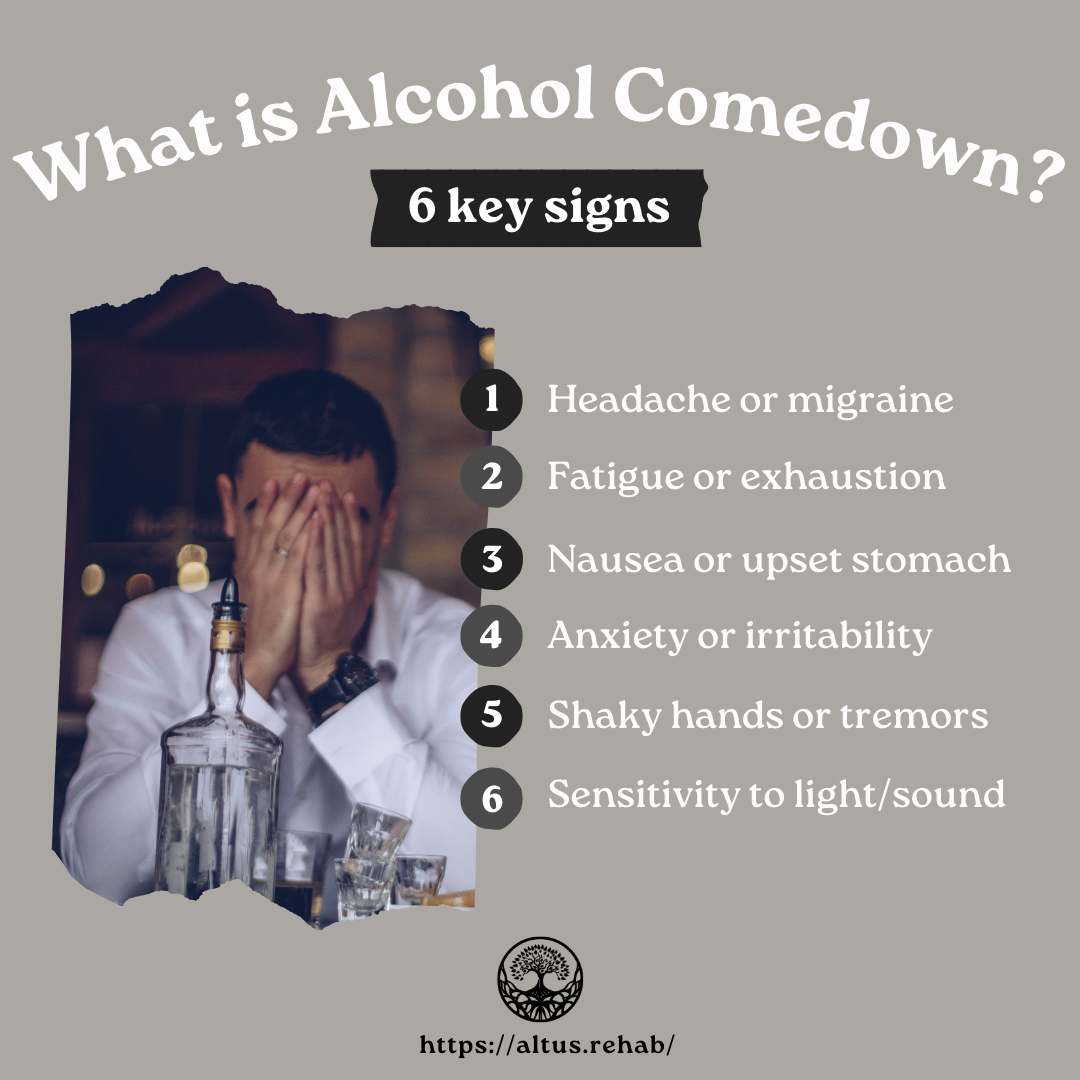
Common signs of an alcohol comedown include headaches, nausea, sensitivity to light and sound, irritability, anxiety, and difficulty concentrating.
While less severe than full alcohol withdrawal, a comedown can still be physically and emotionally taxing, especially after binge drinking or frequent alcohol use. Proper hydration, rest, and nutrition can help ease symptoms of alcohol abuse, but understanding the causes and timeline of a comedown is key to managing it effectively.
Read Next: How Long Does It Take to Detox? Timeline, Symptoms, & Next Steps
Alcohol Comedown vs Alcohol Withdrawal Differences Chart
| Feature | Alcohol Comedown | Alcohol Withdrawal |
| Definition | Temporary, mild-to-moderate symptoms after alcohol use as it leaves the system | Medical condition that occurs in people with alcohol dependence when alcohol intake is reduced or stopped |
| Cause | The body recovering from the acute effects of alcohol, dehydration, and metabolic changes | Brain and body dependence on alcohol; sudden reduction disrupts neurotransmitter balance |
| Onset | Within hours after drinking, usually peaking the next morning | Typically 6–24 hours after last drink; severe symptoms can appear within 48–72 hours |
| Duration | Usually 12–24 hours, may last up to 48 hours | Can last several days; post-acute withdrawal symptoms (PAWS) may persist for weeks |
| Severity | Mild to moderate: headache, fatigue, nausea, irritability, anxiety, sensitivity to light/noise | Can be moderate to severe: tremors, sweating, nausea, anxiety, seizures, hallucinations, delirium tremens in severe cases |
| Treatment | Self-care: hydration, rest, proper nutrition, over-the-counter remedies | Medical supervision may be required; medications (e.g., benzodiazepines) and supportive care |
| Risk | Low; generally resolves on its own | High if severe; complications can be life-threatening without treatment |
| Who It Affects | Anyone who drinks heavily or binge drinks | Primarily people with alcohol dependence or long-term heavy alcohol use |
| Prevention | Drink in moderation, stay hydrated, eat before drinking | Gradual tapering under medical supervision, ongoing treatment for alcohol use disorder |
Causes and Risk Factors of Alcohol Comedown
An alcohol comedown occurs as the body reacts to the effects of alcohol wearing off, and several factors can influence both its severity and likelihood.
Causes:
- Dehydration: Alcohol is a diuretic, causing fluid loss that leads to headaches, dry mouth, and fatigue.
- Toxin buildup: The body metabolizes alcohol into acetaldehyde, a toxic byproduct that contributes to nausea and malaise.
- Low blood sugar: Alcohol can lower blood glucose, causing shakiness, weakness, and irritability.
- Inflammation: Alcohol triggers inflammatory responses, which can lead to body aches and mood changes.
- Sleep disruption: Even if alcohol makes you drowsy, it reduces sleep quality, leaving you tired the next day.
Risk Factors:
- High alcohol intake: Excessive alcohol use in a short period increases the severity of a comedown.
- Binge drinking habits: Frequent binge drinking makes comedowns more likely and intense.
- Poor hydration or nutrition: Not drinking water or eating enough before drinking exacerbates symptoms.
- Individual metabolism: Genetics, age, and liver health can affect how quickly alcohol is processed.
- Combination with other substances: Mixing alcohol with caffeine, medications, or other drugs can worsen symptoms.
Comprehensive List of Alcohol Comedown Symptoms
After heavy drinking (or even moderate drinking), the body experiences a range of physical and psychological effects as it recovers, commonly referred to as an alcohol comedown or hangover. Symptoms can vary in intensity depending on the individual, amount of alcohol consumed, and underlying health conditions.
- Headache: Pain caused by dehydration and changes in blood vessels in the brain, which can be worsened in individuals with high blood pressure.
- Fatigue: Extreme tiredness due to poor sleep quality and disrupted circadian rhythms, affecting cognitive functioning and mental alertness.
- Nausea and vomiting: Digestive upset resulting from stomach irritation and toxin buildup, which can exacerbate liver damage.
- Dehydration: Dry mouth, dizziness, and lightheadedness caused by fluid loss, contributing to electrolyte imbalances.
- Muscle aches: Body soreness due to inflammation and electrolyte imbalance, sometimes linked to postural tremor or intention tremor.
- Sensitivity to light and sound: Heightened sensory response as the nervous system recovers.
- Irritability: Mood swings and frustration linked to brain chemistry changes and overall mental health problems.
- Anxiety: Increased nervousness or restlessness as neurotransmitters stabilize.
- Difficulty concentrating: Mental fog and slower cognitive functioning due to fatigue, dehydration, or brain lesions in severe cases.
- Shakiness: Tremors or jitteriness from low blood sugar and nervous system rebound, which can resemble postural or intention tremor.
- Sweating: Excessive perspiration as the body works to eliminate toxins.
- Rapid heartbeat: Elevated heart rate as the cardiovascular system recovers, which may be concerning for those with heart disease.
- Appetite changes: Loss of appetite or cravings due to digestive upset and blood sugar fluctuations, which can further stress the liver and contribute to alcoholic liver disease, alcoholic hepatitis, or alcoholic fatty liver disease.
Alcohol Comedown Symptom Timeline Chart
| Time After Last Drink | Common Symptoms | Notes / Mechanism |
| 0–4 hours | Mild drowsiness, slight nausea, mood changes | Alcohol is still in the bloodstream; CNS begins to depress, blood sugar may start to drop |
| 4–8 hours | Headache, fatigue, mild dehydration, sensitivity to light/noise | Alcohol metabolism produces acetaldehyde, a toxic byproduct; fluid loss leads to dehydration |
| 8–12 hours | Increased headache, nausea, irritability, shakiness | Blood alcohol levels drop toward zero; body struggles to restore homeostasis |
| 12–24 hours | Peak comedown symptoms: headache, tiredness, poor concentration, mood swings, digestive upset | Electrolyte imbalance, low blood sugar, and inflammatory response contribute to symptoms |
| 24–36 hours | Symptoms start to subside in mild cases: lingering fatigue, mild mood changes, low energy | Liver continues metabolizing residual byproducts; hydration and nutrition can accelerate recovery |
| 36+ hours | Most symptoms resolved in healthy individuals | Severe cases may persist longer, especially with very heavy drinking or repeated binge drinking |
Prevention of Alcohol Comedown
Completely avoiding an alcohol comedown is difficult, but its severity can be reduced. Staying hydrated, eating before drinking, pacing alcohol intake, and avoiding mixing types all help. Adequate sleep and replenishing electrolytes afterward also aid recovery. Moderation and preparation are key to minimizing symptoms.
Management and Treatment of Alcohol Comedown
Managing an alcohol comedown focuses on relieving symptoms and supporting the body as it recovers from alcohol’s effects. Proper hydration, rest, and nutrition are key components of symptom relief, while ongoing support from family and friends can help reinforce healthy recovery habits.
Mild to moderate alcohol comedown treatment
For mild to moderate comedowns, drinking water or electrolyte-rich fluids helps counter dehydration and restore electrolyte balance. Eating a balanced meal and getting rest can reduce fatigue, nausea, and cognitive sluggishness. Over-the-counter pain relievers may ease headaches or muscle aches, but should be used cautiously alongside alcohol.
Severe or complicated alcohol comedown treatment
Severe comedowns may require medical attention if symptoms include persistent vomiting, confusion, or severe dehydration. Medical professionals can provide intravenous fluids, electrolyte replacement, and medications to control nausea or other acute symptoms. Inpatient care, residential accommodation, or outpatient addiction treatment may be recommended for monitoring and preventing complications.
Treatment for alcohol use disorder
Different from a basic alcohol comedown, alcohol use disorder requires a structured treatment plan that addresses both physical dependence and behavioral factors. This may include medically supervised alcohol detox, medication assisted treatment, medications for alcohol use disorders, counseling, self-help groups, and support programs. Long-term management focuses on sustainable sobriety, lifestyle changes, and ongoing support from family and friends.
You can get started by researching how much detox will cost in your area.
Outlook & Prognosis for Alcohol Comedow
The outlook for an alcohol comedown is generally good, as symptoms are temporary and improve within 12–24 hours. Severity depends on alcohol intake, hydration, nutrition, sleep, and metabolism.
While uncomfortable, comedowns rarely cause long-term health issues, though repeated heavy drinking increases the risk of dependence and complications.
When to Contact a Medical Professional
Most alcohol comedowns are mild and resolve on their own, but certain symptoms require prompt medical attention. Seek help if you experience severe dehydration, persistent vomiting, confusion, rapid heartbeat, fainting, or difficulty breathing, as these could signal complications beyond a typical comedown.
If symptoms worsen instead of improving after 24 hours or if you have underlying health conditions such as liver disease or heart problems, contacting a healthcare provider is essential to ensure safety and proper care.
Related Read: Cold Turkey or Taper Off Alcohol? What’s the Best Approach for Recovery
Altus Rehab: Personalized Care for Alcohol Use and Recovery
Worried about alcohol use or worsening comedown symptoms? Altus Rehab in Los Angeles offers a safe, supportive, and luxury rehab environment to begin recovery. Alcohol use disorder (AUD) can affect mental and physical health, causing mood changes, anxiety, memory issues, tremors, nausea, and severe comedown effects, while long-term abuse increases risks of heart disease, liver damage, and cognitive impairments.
Our 30-day residential program combines therapeutic and holistic methods to safely manage detox, reduce withdrawal risks, and build recovery skills. Clients receive individual and group therapy, family support, experiential therapies, and mindfulness activities tailored to both physical and behavioral needs.
With only six clients per estate, Altus provides personalized care, 24/7 supervision, and step-down aftercare to support long-term sobriety.
Contact us today to start your recovery. Most insurance plans accepted.
Alcohol Comedown FAQs
Here are some questions people also ask about alcohol comedown or alcohol misuse more generally:
What does an alcohol come down feel like?
An alcohol comedown can feel like fatigue, headache, nausea, irritability, anxiety, dizziness, and difficulty concentrating as your body recovers from alcohol’s effects.
How long does your body take to recover from alcohol?
Recovery from alcohol typically takes 12–24 hours for most comedown symptoms, but full physical and mental restoration can take a few days depending on drinking amount and individual health.
Do you have a comedown from alcohol?
Yes, anyone who drinks more than usual or drinks on an empty stomach can experience a comedown, which is the mild-to-moderate set of symptoms that occur as alcohol leaves the body.
How long after you quit drinking does your body return to normal?
After quitting alcohol, the body begins recovering immediately, but complete normalization, including liver function, sleep patterns, and cognitive function, can take weeks to months depending on prior drinking habits.