Contents
- 1 Luxury Detox Programs in Los Angeles: How They Compare With Standard Detox
- 2 Luxury Detox vs Standard Detox: The Core Difference
- 3 How Medical Care and Monitoring Can Differ
- 4 Privacy, Comfort, and Environment in a Luxury Setting
- 5 Who May Benefit Most From a Luxury Detox Program
- 5.1 Adults who need strong privacy and discretion
- 5.2 People likely to leave a more institutional setting
- 5.3 People detoxing from substances with significant withdrawal complexity
- 5.4 Patients with co-occurring stress, burnout, or mental health concerns
- 5.5 Families who need more support navigating next steps
- 5.6 Who may not need a luxury setting
- 6 Cost, Value, and Common Tradeoffs to Consider
- 7 What to Expect After Detox Ends
- 8 How to Choose the Right Detox Option in Los Angeles
- 9 Frequently Asked Questions About Luxury Detox Programs
- 9.1 Is a luxury detox program medically better than a standard detox setting?
- 9.2 Who is the best fit for a luxury detox program in Los Angeles?
- 9.3 Does luxury detox cost more because of amenities alone, or because of the level of care?
- 9.4 What should families ask before choosing between luxury detox and standard detox?
- 9.5 What is the next step if someone needs detox but is still comparing options?
- 10 Choosing Based on Fit, Not Marketing
Luxury Detox Programs in Los Angeles: How They Compare With Standard Detox
For many people, the hardest part of treatment is not deciding they need help. It is figuring out what kind of help is actually appropriate. If you are comparing a luxury detox program with a more standard detox setting, the differences can feel unclear. Marketing language often emphasizes comfort, privacy, and amenities, but families usually want a more practical answer: what changes medically, what changes operationally, and what matters most for safety.
In Los Angeles and the greater L.A. area, detox options range from hospital-based stabilization to private residential detox centers with a high-end environment and more individualized support. The right fit depends on the substance involved, withdrawal risk, co-occurring health concerns, privacy needs, and what happens after detox. Detox is an important first step, but it is not complete addiction treatment on its own.
This guide explains how a luxury detox program differs from standard detox in practical terms, including medical oversight, staffing, environment, privacy, cost, and next-step planning. The goal is not to suggest that luxury is automatically better for everyone. It is to help you choose based on medical needs and real-world fit, especially if you are looking for medical detox in Los Angeles or a private detox center in California.
Luxury Detox vs Standard Detox: The Core Difference
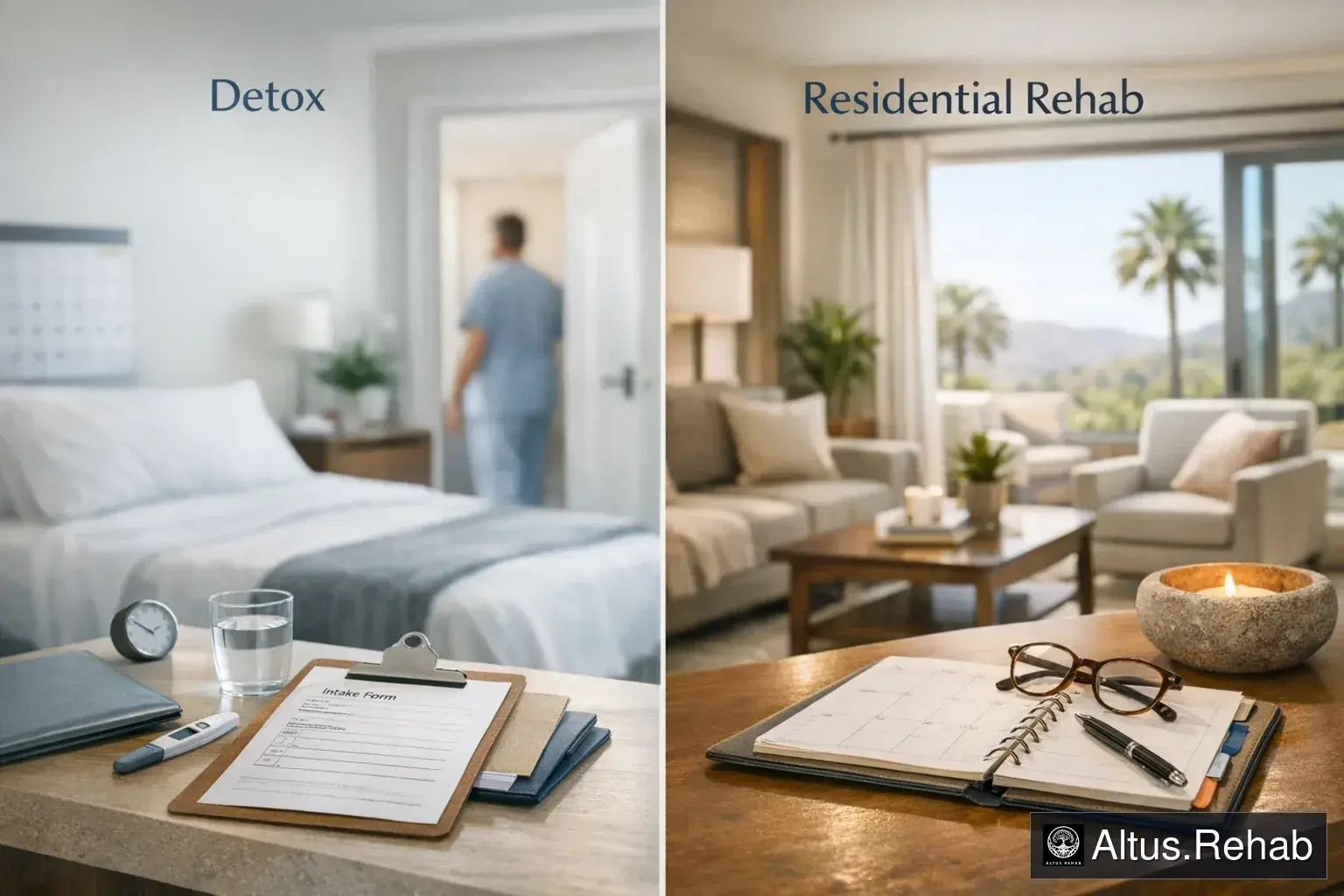
The core difference between a luxury detox program and a standard detox setting is not simply nicer furniture or a more attractive property. At a meaningful level, the comparison usually comes down to how the treatment experience is structured across five areas:
- Medical supervision and withdrawal management
- Staff attention and care coordination
- Privacy and discretion
- Physical environment and comfort
- Transition planning into the next level of care
A standard detox setting may be appropriate and effective for many people, especially when the primary need is safe withdrawal management in a straightforward setting. These programs may be more institutional, more shared, and less individualized in their day-to-day experience. In some cases, they focus mainly on stabilization and discharge planning.
A luxury detox program usually aims to combine medically supervised detox with a more private, higher-touch residential environment. In Los Angeles, that can matter for adults who want confidentiality, need distance from daily triggers, or are more likely to stay engaged in treatment when the setting feels calm, organized, and respectful rather than chaotic or impersonal.
That said, readers should be careful not to confuse “luxury” with “medically superior” in every case. A luxury setting is only valuable if it also delivers strong clinical fundamentals. A beautiful environment cannot substitute for withdrawal assessment, medication management when appropriate, monitoring, and a clear plan for continuing care.
When families compare luxury detox vs standard detox, they are often really asking three questions:
- Will my loved one be safe during withdrawal?
- Will they actually stay and participate?
- What happens after the detox phase is over?
Those are the right questions. In practical terms, a strong luxury detox program should address all three.
For a broader look at what defines a higher-end detox experience in California, see Luxury Detox in California: What to Expect from a Detox Program.
What “standard detox” can mean
Not all standard detox centers are the same. Some are hospital-connected. Some are freestanding programs. Some may offer residential support, while others are much more limited in what they can provide outside of medication and monitoring. A standard setting may involve:
- Shared rooms or lower privacy
- More basic accommodations
- Less individualized scheduling
- A stronger focus on stabilization than on the overall experience
- Shorter or more rigid transition planning
That does not make standard detox inadequate by definition. It simply means the patient experience and support model may be more basic.
What “luxury detox” should mean beyond amenities
A legitimate luxury detox program should not be “luxury” in name only. The term should reflect a combination of clinical and environmental features, such as:
- Private or more discreet care
- Comfort-focused surroundings that reduce unnecessary stress
- Close coordination between medical and residential staff
- Thoughtful admission support and individualized planning
- A smoother transition into residential addiction treatment when needed
In other words, the environment should support the clinical work, not overshadow it.

How Medical Care and Monitoring Can Differ
When people search for a private detox center or luxury rehab Los Angeles, many assume the biggest difference will be comfort. In reality, the medical model matters more than any amenity. This is especially true for withdrawal from alcohol, benzodiazepines, opioids, kratom, methamphetamine, cocaine, cannabis, heroin, fentanyl, and other stimulants or sedatives.
Withdrawal risks vary widely by substance. Alcohol and benzodiazepine withdrawal, for example, can become medically serious and require close monitoring. Opioid withdrawal is often intensely uncomfortable and can destabilize a person enough that they leave treatment too early without proper support. Stimulant withdrawal may present more psychological and behavioral concerns, including depression, agitation, insomnia, or severe exhaustion. Kratom withdrawal can also be physically and emotionally disruptive, especially in heavier or long-term use.
A medically supervised detox program in Los Angeles should assess:
- Substance use pattern and frequency
- Current withdrawal symptoms
- History of complicated withdrawal
- Current medications
- Mental health concerns
- Physical health conditions
- Risk of relapse or leaving care prematurely
Assessment and stabilization
In both luxury and standard settings, a proper detox process starts with evaluation. The difference is often in how individualized and coordinated that process feels. A luxury detox program may provide more hands-on intake support, more privacy during the assessment process, and more continuity between admissions, nursing, medical staff, and residential support teams.
That can matter in Los Angeles, where many patients are arriving under stress, sometimes with work, family, or public-facing privacy concerns. A rushed or disorganized admission experience can increase resistance to treatment. A calm, coordinated intake can make it easier for someone to stay through the difficult first 24 to 72 hours.
Medication management and symptom monitoring
Withdrawal management is not one-size-fits-all. Depending on the substance and the person’s health history, detox may involve medications to reduce withdrawal severity, support sleep, manage agitation, ease nausea, stabilize blood pressure, or lower the risk of medical complications. What matters is not whether medications are used in a blanket way, but whether they are used carefully and appropriately.
In a stronger luxury detox program, the patient may benefit from:
- Closer observation during higher-risk periods
- More individualized symptom response
- Faster communication between staff members
- A quieter setting that makes symptoms easier to monitor accurately
- Better coordination when a medical or psychiatric issue changes the care plan
Again, those benefits are meaningful only if the underlying clinical infrastructure is solid. Families should ask practical questions about physician involvement, nursing support, monitoring processes, and how the program handles escalation if symptoms become more severe than expected.
If you want a step-by-step overview of the withdrawal management process, read How Does Medical Detox Work? What to Expect, Step by Step.
Staffing and responsiveness
One of the most important but least advertised differences between luxury detox programs and more standard settings is responsiveness. Staffing affects everything: symptom management, emotional support, communication with families, medication timing, and whether small issues are addressed before they become bigger ones.
Families often expect a luxury program to feel more attentive, and that expectation is reasonable. In practical terms, they may be looking for:
- Better communication about how the patient is doing
- More individualized support during cravings, anxiety, or insomnia
- Less waiting for routine needs
- More continuity from detox into residential treatment
- Clearer coordination if the patient has complex needs
This does not mean a standard program cannot be clinically sound. It means a luxury model may be better equipped for adults who need not just detox, but a more contained and carefully managed treatment experience.
Substance-specific considerations
Not every detox center is equally comfortable managing every substance. That is another area where families should ask direct questions. Someone seeking detox for alcohol or benzodiazepines should ask about experience with higher-risk withdrawal. Someone seeking treatment for kratom, fentanyl, heroin, prescription opioids, methamphetamine, or cocaine should ask how the program addresses substance-specific symptoms, cravings, sleep disruption, mood instability, and transition planning.
Altus Rehab serves adults seeking medically supervised treatment for alcohol use disorder, benzodiazepines, kratom use disorder, methamphetamine addiction, and other substance use concerns, with a focus on private, clinically managed care in the Los Angeles area.

Privacy, Comfort, and Environment in a Luxury Setting
Environment is often the most visible part of a luxury detox program, but it should be understood in the right way. Comfort does not replace medical care. Privacy does not replace clinical judgment. Amenities do not replace a structured treatment plan. But environment can influence whether a person feels safe enough to stay, rest, stabilize, and engage.
For many adults in Encino, Beverly Hills, Burbank, Woodland Hills, Glendale, Malibu, Santa Clarita, Santa Monica, Tarzana, Hollywood Hills, Agoura Hills, Van Nuys, and across the greater L.A. area, privacy is not a luxury in the superficial sense. It is a practical treatment need.
Why privacy matters in detox
People delay treatment for many reasons, and fear of exposure is one of them. Some are professionals with public-facing roles. Some are parents trying to protect children from unnecessary disruption. Some simply do not want to be in a crowded or highly visible facility while managing withdrawal.
A private detox center may help by offering:
- More discreet admissions procedures
- Lower visibility than a busy institutional setting
- A more confidential residential experience
- Reduced social stress during acute withdrawal
- More personal space to rest and recover
For some patients, this directly improves engagement. A person who would refuse a crowded setting may accept care in a more private one. That does not mean privacy itself produces better outcomes. It means the right environment can make medically supervised treatment more accessible and more realistic.
How comfort can support early recovery
Early detox can involve fatigue, sweating, nausea, insomnia, body aches, anxiety, irritability, low mood, restlessness, and concentration problems. In that context, a calmer residential setting can reduce overstimulation. People are often more willing to eat, sleep, hydrate, and remain in care when the environment feels organized and supportive.
This is where detox program amenities and care need to be viewed honestly. Comfortable surroundings may help with:
- Rest during physically draining withdrawal periods
- Lower stress and agitation
- Reduced sense of punishment or institutionalization
- Willingness to remain through the hardest phase of detox
- Smoother emotional adjustment into residential treatment
But they should never be the primary reason to choose a program. A family should not hear “luxury” and assume the clinical side is automatically covered. The safer approach is to ask whether the program combines comfort with real medical supervision, structured care, and next-step planning.
What families often expect from a luxury detox experience
Families comparing options in California often expect more than aesthetics. They usually want a program that feels calm, discreet, and professionally run. Common expectations include:
- Respectful, non-chaotic care
- Clear communication from admissions through discharge planning
- A more individualized daily experience
- Attention to nutrition, sleep, and routine during stabilization
- A setting that supports dignity during a vulnerable time
Those expectations are reasonable. They simply need to be paired with questions about staffing, monitoring, and what happens if the patient’s condition changes.
Who May Benefit Most From a Luxury Detox Program
A luxury detox program is not automatically the right fit for every person who needs withdrawal management. Some people primarily need immediate stabilization in the most medically intensive setting available. Others may do well in a standard residential detox. But there are certain situations in which a luxury detox program in Los Angeles may be especially appropriate.
Adults who need strong privacy and discretion
If a person has professional visibility, family concerns, or a strong need for confidentiality, a private, high-end setting may remove a major barrier to treatment. This is common for executives, healthcare professionals, attorneys, entrepreneurs, entertainment industry professionals, and adults who simply do not want their treatment process to feel public or exposed.
People likely to leave a more institutional setting
Some patients are ambivalent about treatment. They may agree to detox but become resistant once withdrawal symptoms set in. If they are already skeptical, ashamed, overstimulated, or highly anxious, an impersonal environment can increase the chance that they leave early. A calm luxury setting with more individual attention may help them stay long enough to stabilize and consider the next level of care.

People detoxing from substances with significant withdrawal complexity
Alcohol, benzodiazepines, opioids, and kratom can all require structured monitoring and careful management. Methamphetamine and cocaine withdrawal may involve significant emotional and behavioral strain even when classic medical danger is lower than with alcohol or benzodiazepines. In these situations, a luxury program may be a good fit if it combines close observation with a supportive residential environment.
Patients with co-occurring stress, burnout, or mental health concerns
Many adults seeking detox are not only physically depleted. They are also dealing with panic, depression, insomnia, emotional exhaustion, grief, isolation, or intense shame. Detox cannot resolve all of that, but a more contained and thoughtful setting may reduce friction during the most vulnerable stage of care.
A luxury detox program may be especially useful when the family wants help thinking beyond withdrawal itself. Detox is the beginning, not the whole plan. Families often need guidance around whether the next step should be residential care, step-down services, or another structured treatment path.
If a person is likely to benefit from continued live-in support after withdrawal, a program with a direct path into Luxury Residential Addiction Treatment in Los Angeles, CA can make the transition easier and more clinically consistent.
Who may not need a luxury setting
Some people do not need a luxury environment to receive safe, effective detox. If privacy is not a major concern, the setting is less important to engagement, and the available standard program has appropriate medical capability, a more basic option may be enough. The goal is fit, not status.
The right question is not, “What is the most upscale option?” It is, “What setting is most likely to keep this person safe, engaged, and moving into continued treatment?”
Cost, Value, and Common Tradeoffs to Consider
One of the most common questions families ask is whether luxury detox costs more because of amenities alone or because of the level of care. The honest answer is: it can be both.
In some programs, higher cost reflects private accommodations, more upscale surroundings, a more discreet location, and a more personalized residential experience. In stronger programs, cost may also reflect higher-touch staffing, more coordinated care, and a smoother continuum from detox into residential treatment.
This is why cost should be discussed in terms of value and fit, not only price category.
Where the added cost may come from
A luxury detox program may cost more due to factors such as:
- Private or semi-private accommodations
- Higher staff attention and support
- More discreet admissions and care processes
- Enhanced comfort and residential features
- More individualized treatment coordination
That does not mean every high-cost program is worth the difference. Some centers market amenities aggressively without offering much additional clinical depth. That is why families should ask what the program actually provides during detox, not just what the property looks like.
Realistic tradeoffs to consider
Choosing between luxury and standard detox often involves tradeoffs. For example:
- Higher comfort vs. lower cost: A more standard program may be financially easier, while a luxury setting may reduce treatment resistance for certain patients.
- More privacy vs. broader availability: Private programs may offer discretion, but some families may prioritize immediate placement wherever medically appropriate care is available.
- High-touch environment vs. simpler stabilization: Some patients benefit from more individual attention, while others mainly need safe withdrawal management and a prompt next step.
- Residential continuity vs. fragmented transitions: Programs that can move a patient from detox into residential care may reduce drop-off after withdrawal ends.
Families should also remember that leaving detox too early, choosing a setting that the patient refuses, or failing to arrange follow-up treatment can create costs of their own, financially and clinically.
Questions to ask when evaluating luxury treatment claims
If a program is described as luxury, ask questions that go beyond appearances:

- What medical supervision is available during withdrawal?
- How does the team monitor symptoms and respond to changes?
- What experience does the program have with this specific substance?
- How private is the setting in practical terms?
- What happens if detox symptoms escalate?
- How are co-occurring mental health concerns handled during admission?
- What is the plan after detox is complete?
- Can the patient step directly into residential addiction treatment if needed?
Those questions help separate “high-end marketing” from a genuinely thoughtful treatment model.
For a practical cost overview, see How Much Does Drug Detox Cost? A Complete Pricing Guide.
What to Expect After Detox Ends
One of the biggest mistakes families make is treating detox as the finish line. In reality, detox is usually the first clinical phase of treatment. It helps the body stabilize as substances leave the system and withdrawal symptoms are managed, but it does not by itself address the patterns, triggers, stressors, and relapse risks that sustain addiction.
Organizations such as SAMHSA, ASAM, and NIDA consistently frame detox or withdrawal management as one part of a broader continuum of care. In practical terms, that means a person who completes detox still needs a plan for what comes next.
Why detox alone is usually not enough
Detox may reduce acute physical instability, but after withdrawal ends, many of the harder issues remain:
- Cravings
- Stress reactivity
- Sleep disruption
- Mood symptoms
- Relationship strain
- Work and family pressure
- Environmental triggers in Los Angeles or back at home
Without continued treatment, people often return quickly to the same conditions that supported substance use before detox.
Typical next steps after medical detox
After detox, the next level of care depends on the person’s medical needs, psychiatric stability, relapse risk, home environment, and motivation. Common next steps may include:
- Residential addiction treatment
- A step-down treatment setting
- Medication-related follow-up when clinically appropriate
- Therapy and recovery planning
- Family involvement and support planning
- Alumni programming and continued connection after formal treatment
For people with ongoing instability, high relapse risk, or limited support at home, residential detox California programs that transition directly into residential treatment may be especially valuable. That continuity can reduce the chance of a gap between phases of care.
To better understand how detox fits into the larger landscape of treatment settings, see Different Types of Addiction Treatment Centers.
Transitioning from detox into residential care
In many cases, the most important value of a luxury detox program is not the detox stay alone. It is the ability to carry momentum forward. Someone who stabilizes in a private, supportive setting may be much more willing to continue into residential care than someone who experiences detox as rushed, impersonal, or purely crisis-based.
That is one reason families in Los Angeles often compare detox options alongside residential options rather than treating them as separate decisions. If continued structure is likely to help, it makes sense to ask how the program handles that handoff from the beginning.
How to Choose the Right Detox Option in Los Angeles
Choosing the right detox option means balancing medical need, emotional reality, privacy concerns, timeline, and budget. The best decision is not always the most expensive one, and it is not always the fastest available bed. It is the option that realistically fits the person’s risk level and increases the likelihood they will remain in care.
Start with medical risk, not amenities
The first question should always be: what level of withdrawal risk is present? Alcohol and benzodiazepine withdrawal deserve careful attention because of their potential severity. Opioid, fentanyl, heroin, kratom, stimulant, cannabis, and polysubstance use all create different patterns of need. If the person has prior severe withdrawal, a seizure history, major medical concerns, or significant psychiatric instability, that needs to shape placement from the beginning.

Consider whether privacy will affect follow-through
If the person is highly reluctant and privacy is a major barrier, a luxury or private detox center may be the more realistic path into treatment. That is not about image. It is about whether the person will actually say yes and stay long enough to benefit.
Look at the continuity of care
Ask whether the program can support the next step after detox. If someone likely needs residential addiction treatment, it is worth exploring a setting that can provide or coordinate that transition smoothly. In Los Angeles, where outside stressors can quickly pull a person back into old routines, continuity matters.
Ask how individualized the care really is
Individualized care should mean more than offering choices in meals or room type. It should mean the team is considering substance history, mental health concerns, sleep, family dynamics, and readiness for continued treatment. A luxury setting should enhance that personalization, not distract from it.
Use this simple decision framework
If you are comparing luxury detox programs in Los Angeles, ask:
- Safety: Can this setting manage the person’s likely withdrawal risk?
- Engagement: Is this a place the person is likely to accept and remain in?
- Privacy: Does the environment fit the person’s need for discretion?
- Support: How responsive and coordinated is the staff?
- Next step: What happens immediately after detox?
- Value: Are we paying for meaningful care differences, not just appearances?
That framework tends to produce clearer decisions than asking whether one program simply feels more “luxurious” than another.
Frequently Asked Questions About Luxury Detox Programs
Is a luxury detox program medically better than a standard detox setting?
Not automatically. A luxury detox program is not medically better just because it offers a nicer environment. The clinical quality depends on the medical supervision, symptom monitoring, medication management when appropriate, staffing responsiveness, and transition planning. For some people, a luxury setting is the better overall fit because privacy, comfort, and individualized care improve follow-through. For others, a standard setting may be clinically appropriate.
Who is the best fit for a luxury detox program in Los Angeles?
Adults who value privacy, are hesitant to enter treatment, need a calmer residential setting, or may continue into residential addiction treatment are often strong candidates. This can include people seeking confidential care in Los Angeles, Encino, Beverly Hills, Santa Monica, Malibu, Glendale, Burbank, Woodland Hills, Hollywood Hills, Tarzana, Santa Clarita, Agoura Hills, and nearby communities. A good fit also depends on the substance involved, health history, and whether the environment will make it more likely the person stays engaged.
Does luxury detox cost more because of amenities alone, or because of the level of care?
It can be either or both. Some of the added cost may reflect privacy, accommodations, and a more comfortable environment. In stronger programs, cost may also reflect a higher-touch care model, better staff coordination, and smoother transition planning. Families should ask what they are paying for in clinical terms, not just residential terms.
What should families ask before choosing between luxury detox and standard detox?
Families should ask about withdrawal risk, medical supervision, how symptoms are monitored, whether the program has experience with the specific substance involved, what level of privacy is offered, how co-occurring issues are handled, and what the next level of care will be after detox. These questions matter more than amenities lists.
What is the next step if someone needs detox but is still comparing options?
The next step is usually to talk through the person’s substance use, withdrawal risk, privacy concerns, timeline, and likely need for residential care with an admissions team that can explain the options clearly. That conversation can help narrow whether a luxury detox program, another medically supervised detox setting, or a more continuous residential path makes the most sense.
Choosing Based on Fit, Not Marketing
A luxury detox program can be a strong option when privacy, comfort, and individualized support make it more likely that someone will enter treatment and stay through the difficult early phase of withdrawal. But the real value of luxury detox is not appearance alone. It is the combination of confidential, medically supervised care, a calmer environment, responsive staffing, and a clear plan for what comes next.
If you are comparing luxury detox vs standard detox in Los Angeles, focus first on safety, then on engagement, privacy, continuity of care, and realistic value. For many people, the right choice is the setting that meets both the medical need and the human reality of actually getting through the door.
If you want help talking through which detox setting fits your medical needs, privacy concerns, timeline, and budget, Altus Rehab offers confidential, 24/7 admissions support. Call (844) 656 3164 to discuss your situation and compare the options in a practical way before choosing the next step.