Contents
- 1 Why Los Angeles Is a Common Choice for Private Detox
- 2 Who Usually Benefits Most From a Private Medical Detox Setting
- 3 What Medical Detox in Los Angeles Can Offer Beyond Basic Withdrawal Support
- 4 Why Some Adults Continue Into Residential Treatment After Detox
- 5 Key Factors to Compare Before Choosing a Los Angeles Detox Program
- 6 What the Admissions and Intake Process Typically Looks Like
- 7 When to Call for Immediate Detox Help
- 8 FAQ: Los Angeles Addiction Treatment Options
- 8.1 Why do some adults choose private medical detox in Los Angeles instead of a standard detox program?
- 8.2 How do I know whether I need detox only or detox followed by residential treatment?
- 8.3 What affects the cost of private medical detox in Los Angeles?
- 8.4 How quickly can someone be admitted to a Los Angeles detox program?
- 8.5 What substances usually require medically supervised detox?
- 9 Los Angeles and California Treatment Considerations That Matter in Real Planning
- 10 Conclusion: Choosing the Right Next Step for Private Medical Detox in Los Angeles
Choosing addiction treatment in a city as large as Los Angeles can feel overwhelming, especially when the need is urgent and privacy matters. For many adults and families, the real question is not just where to go, but what level of care is safest, most discreet, and most likely to support the next step after withdrawal begins. If you are comparing options for private medical detox Los Angeles, it helps to understand what medical detox actually includes, when residential care makes sense, and why Los Angeles is often a practical choice for both local and travel-in clients across California.
This guide explains the treatment landscape in clear terms, with a focus on medical oversight, confidentiality, admissions logistics, and the difference between detox-only care and a more coordinated detox-and-residential plan.
Why Los Angeles Is a Common Choice for Private Detox
Los Angeles is a common destination for adults seeking private, medically supervised addiction treatment because it offers a combination that is harder to find in smaller markets: access to higher-acuity care, discreet residential settings, and a broader range of treatment options in one region. For someone dealing with alcohol, benzodiazepines, kratom, methamphetamine, opioids, fentanyl, cocaine, cannabis, heroin, or other substances, that combination can matter early in the process.
One reason people look for medical detox in Los Angeles is privacy. In a major metro area, clients can often pursue treatment without drawing attention in the way they might in a smaller town where employers, neighbors, or extended family may be closely connected. That matters to executives, professionals, public-facing individuals, parents, and anyone who wants their care handled confidentially.
Another reason is access to a full continuum of care. Detox is not the same as treatment completion. In many cases, the safest and most efficient option is to begin with medically managed withdrawal and then transition directly into residential treatment without having to restart intake elsewhere. Los Angeles is often chosen because people can find both levels of care within the same clinical ecosystem. For readers comparing options, Altus Rehab offers Luxury Detox in Los Angeles, CA as well as Luxury Residential Addiction Treatment in Los Angeles, CA, which is an important practical consideration when continuity matters.
Los Angeles is also relevant for people traveling from nearby communities such as Encino, Beverly Hills, Burbank, Woodland Hills, Glendale, Malibu, Santa Clarita, Santa Monica, Tarzana, Hollywood Hills, Agoura Hills, and Van Nuys. Some want care close enough for family coordination but far enough from home triggers, dealers, social pressure, or environments tied to heavy use. Others are coming from elsewhere in California and want a private setting in the Greater L.A. Area where admissions, transportation, and treatment planning can be coordinated quickly.
That does not mean Los Angeles is automatically the right fit for every person. The right setting depends on withdrawal risk, mental health concerns, current substance use, prior detox history, medical needs, and how much structure is needed after stabilization. But for adults looking for luxury detox Los Angeles options, the city is often appealing because it can support both immediate safety and a smoother next step.
Privacy and discretion are often major decision factors
When people search for private rehab Los Angeles, they are often trying to solve several problems at once:
- How to step away from daily obligations without public exposure
- How to avoid attempting withdrawal alone at home
- How to receive medical monitoring in a more private, comfortable environment
- How to prevent a gap between detox and ongoing treatment
- How to handle admissions quickly before motivation changes or withdrawal worsens
Los Angeles can be a strong fit because those concerns are common here, and treatment planning tends to account for them. A discreet environment does not replace clinical care, but it can remove barriers that keep people from entering treatment in the first place.
Local and travel-in clients often have different planning needs
Someone coming from Beverly Hills or Santa Monica may need same-day intake planning and family communication. Someone flying in from another part of California may need help thinking through timing, transportation, medications, and what to bring. In either case, private admissions support is not just administrative. It helps reduce friction at the exact moment when many people are physically uncomfortable, emotionally ambivalent, or worried about exposure.
California-specific planning can also affect the process. Depending on the person’s health history, substance use pattern, and whether they are coming from home, an emergency room, another facility, or out of town, intake logistics may need to be adjusted. That is one reason adults and families often prefer medically supervised detox California options that can discuss practical details before arrival.
Who Usually Benefits Most From a Private Medical Detox Setting
Not every person who uses substances needs inpatient detox, but many do. A private medical detox setting is often most appropriate for adults who are at meaningful risk for withdrawal complications, who have not been able to stop safely on their own, or who need a more confidential environment with close observation and support.

People who often benefit most include:
- Adults with daily or heavy alcohol use, especially if they have experienced shaking, sweating, panic, insomnia, vomiting, hallucinations, or seizures during past attempts to stop
- People dependent on benzodiazepines such as Xanax, Klonopin, Ativan, or Valium, where withdrawal can become medically serious
- Individuals using opioids, heroin, fentanyl, or other substances associated with significant withdrawal discomfort and high relapse risk during early cessation
- People using multiple substances at once, such as alcohol plus benzodiazepines, stimulants plus opioids, or kratom with other sedating drugs
- Adults with co-occurring anxiety, depression, trauma-related symptoms, or sleep disruption that tend to intensify during withdrawal
- People who have tried detoxing at home but relapsed quickly because symptoms became too difficult to manage
- Professionals, parents, and public-facing individuals who need a discreet, structured environment away from work and social pressure
- Clients who likely need treatment beyond detox and want to avoid transferring between unrelated programs
For some substances, the biggest issue is not that withdrawal is always medically dangerous, but that it can be destabilizing enough to lead to immediate reuse. Methamphetamine, cocaine, cannabis, and kratom withdrawal may present differently than alcohol or benzodiazepine withdrawal, but they can still involve exhaustion, depression, agitation, cravings, insomnia, anxiety, and impaired judgment. A medically supported environment can help clients get through that phase more safely and with better continuity.
Substances that often call for medically supervised detox
The substances most commonly associated with the need for medically supervised detox include:
- Alcohol: Withdrawal may include tremors, sweating, elevated heart rate, nausea, agitation, confusion, hallucinations, and seizure risk.
- Benzodiazepines: Withdrawal can be severe and may involve rebound anxiety, panic, insomnia, perceptual changes, and seizure risk.
- Opioids, heroin, and fentanyl: While opioid withdrawal is often described as less likely to be fatal than alcohol or benzodiazepine withdrawal, it can be intense, destabilizing, and difficult to complete without support.
- Kratom: Withdrawal can include irritability, muscle aches, insomnia, mood shifts, gastrointestinal upset, and cravings, particularly in heavier or long-term use patterns.
- Stimulants such as methamphetamine and cocaine: Detox needs may center on monitoring mood symptoms, sleep disruption, exhaustion, agitation, and safety risks during the crash period.
People often ask whether they can just wait it out at home. In some situations, outpatient or home-based cessation may be clinically appropriate, but that decision should be made based on actual risk factors rather than guesswork. Prior withdrawal history, age, medical conditions, co-occurring psychiatric symptoms, pregnancy status, amount used, duration of use, and polysubstance use all matter.
Why private settings appeal to some adults
Private settings are not only about comfort. They may be helpful for adults who are more likely to engage in treatment when the environment feels calm, structured, and respectful. A private setting may reduce exposure to external stressors, improve sleep, support medication adherence, and make difficult early conversations more manageable. For many families, a high-end environment also makes it easier to persuade a loved one to accept help before withdrawal worsens.
If you are trying to compare detox timelines by substance, the article How Long Does Medical Detox Take? Timelines, Symptoms & Safe Next Steps can help frame what varies from person to person.
What Medical Detox in Los Angeles Can Offer Beyond Basic Withdrawal Support
A common misconception is that detox simply means waiting a few days for drugs or alcohol to leave the body. In reality, medical detox is a structured clinical process focused on assessment, monitoring, symptom management, and decision-making about what level of care should come next.
In a well-run medical detox in Los Angeles, care typically goes beyond “getting through withdrawal” in several important ways.
1. Clinical assessment at the beginning, not guesswork
Early detox decisions should be based on a real intake assessment. That usually includes current substances used, approximate amounts, frequency, duration, last use, prior withdrawal episodes, medication list, health conditions, psychiatric symptoms, and immediate safety concerns. The purpose is to determine the right level of care and identify risks before symptoms escalate.
This matters because withdrawal does not follow one universal script. Someone stopping alcohol after years of daily use has a different risk profile than someone detoxing from methamphetamine after a binge pattern, and both differ from someone tapering off benzodiazepines or dealing with kratom dependence.
2. Ongoing observation and symptom management
Medical detox is designed to monitor symptoms as they evolve, not just at admission. Depending on the substance involved, withdrawal may include changes in blood pressure, heart rate, temperature, sleep, anxiety, appetite, hydration, orientation, mood, pain level, cravings, or seizure risk. Continuous observation can make it easier to adjust the treatment approach in real time.
That is especially relevant for alcohol and benzodiazepines, where symptoms can worsen after the person initially believes they are “fine,” and for opioid or stimulant withdrawal, where distress can lead to impulsive discharge or immediate relapse if support is too limited.

3. A calmer, more private environment
For many adults, choosing luxury detox Los Angeles is partly about avoiding the chaos that can undermine early stabilization. A quieter, more private setting may support rest, hydration, nutrition, medication compliance, and communication with clinicians and loved ones. While comfort is not the same as treatment quality, environment can affect whether someone is able to stay long enough to complete detox safely.
4. Substance-specific planning
Detox needs are different across substances. Alcohol use disorder, benzodiazepine dependence, kratom use disorder, methamphetamine use, and opioid dependence do not present identically. Substance-specific detox planning means the care team is thinking about the actual withdrawal pattern, likely complications, and what comes next after stabilization.
For example:
- Alcohol detox may require close monitoring for escalating withdrawal symptoms over the first several days.
- Benzodiazepine detox may involve careful management due to seizure risk and rebound symptoms.
- Kratom detox may need targeted support for restlessness, mood symptoms, and cravings.
- Methamphetamine detox often involves support through crash symptoms, sleep disruption, agitation, and depressive symptoms.
Altus Rehab provides substance-specific services that reflect these differences, including alcohol treatment, benzodiazepine treatment, kratom treatment, and methamphetamine-focused care.
5. Better transition planning after detox
One of the most important benefits of a strong detox program is what happens next. Detox can stabilize the body, but it does not by itself address the patterns, triggers, stressors, mental health concerns, and relapse vulnerabilities that led to treatment. Good detox planning includes a recommendation for the next level of care rather than leaving the client to figure it out alone once acute symptoms ease.
If you want a clearer picture of the process, How Does Medical Detox Work? What to Expect, Step by Step explains the stages in more detail.
Why Some Adults Continue Into Residential Treatment After Detox
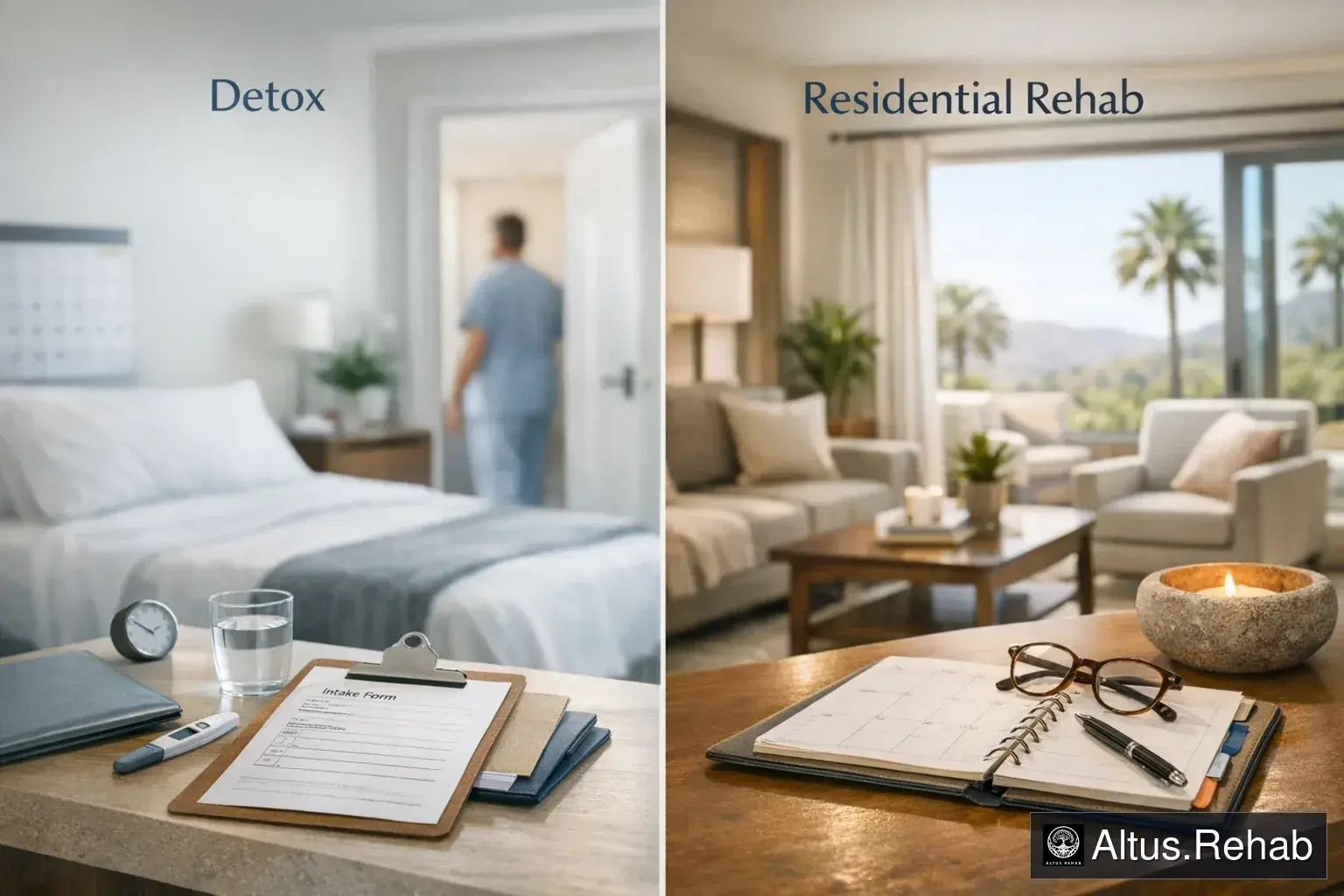
Many adults enter detox thinking their main problem is getting through withdrawal. Once they stabilize, it becomes clearer that stopping safely and staying stopped are two different challenges. That is one reason people often move from detox directly into residential addiction treatment Los Angeles programs.
Detox addresses acute withdrawal. Residential treatment addresses what comes after: cravings, routines, relapse patterns, emotional regulation, triggers, family stress, trauma exposure, distorted thinking, and the practical work of building a recovery plan in a structured environment.
Why detox alone may not be enough
Detox-only care can be appropriate in some cases, particularly when a person already has a strong outpatient plan, lower relapse risk, reliable support, stable housing, and a clinically appropriate next step lined up. But detox alone may be insufficient when:
- The person has relapsed shortly after prior detox attempts
- There is a long history of substance use or multiple prior treatment episodes
- Home is unstable or full of triggers
- There are untreated mental health symptoms
- Family conflict or relationship strain is a major driver
- The person lacks structure, accountability, or sober support
- Polysubstance use has complicated decision-making and functioning
In those situations, transitioning directly from detox into residential care can reduce the risk of a gap in treatment during a highly vulnerable period. Instead of discharging home while still exhausted, emotionally raw, or craving relief, the client moves into a more therapeutic setting where deeper work can begin.
The value of coordinated detox and residential treatment in one program
When detox and residential treatment are coordinated, the handoff can be simpler. The same general treatment team or treatment system already knows the client’s substance use history, withdrawal course, medications, family concerns, and immediate risks. That reduces repeated intake interviews and can help care feel more continuous.
For many families comparing detox and residential treatment Los Angeles options, this is one of the biggest practical advantages. They are not only looking for comfort. They are looking for less disruption, fewer administrative barriers, and clearer treatment planning at a time when every extra complication can derail follow-through.

Another practical point is cost planning. While it is not possible to quote costs without a direct admissions conversation, the total financial picture often depends on the level of care needed, expected length of stay, complexity of withdrawal, and whether treatment continues beyond detox. For a useful overview of common pricing variables, see How Much Does Drug Detox Cost? A Complete Pricing Guide.
Key Factors to Compare Before Choosing a Los Angeles Detox Program
If you are evaluating programs for private medical detox Los Angeles, try to compare them on practical treatment factors rather than just amenities or broad promises. Early admissions decisions often happen under pressure, so a simple comparison framework can help.
Medical capability
Start with the medical side. Ask whether the program is equipped to manage the specific substances involved, especially alcohol, benzodiazepines, opioids, fentanyl, methamphetamine, or polysubstance use. The right question is not “Is detox available?” but “How is this particular withdrawal pattern assessed and monitored?”
Substance-specific experience
Some programs are more prepared than others for benzodiazepine dependence, kratom withdrawal, stimulant crashes, or clients using multiple substances. If the person has a more complex use profile, generic detox messaging may not be enough. Look for a provider that discusses the actual substance concerns clearly.
Continuity into residential care
If residential treatment may be needed, it helps to know whether there is an in-house or coordinated path forward. A direct transition can make a major difference in the first week after detox. This is especially relevant when the client is leaving a high-risk environment in Los Angeles or another California community.
Privacy and discretion
For many adults in Los Angeles, privacy is not a luxury add-on. It is part of whether they will accept treatment at all. Ask how confidentiality is handled, how admissions are managed, whether family communication is coordinated appropriately, and how the environment supports discretion.
Admission speed and clarity
When someone is ready for help, delays matter. A program should be able to explain what the admissions process looks like, what information is needed, what to bring, what happens on arrival, and whether local or travel support can be coordinated. If the answers are vague, that may create unnecessary friction.
Comfort that supports care, not comfort instead of care
High-end surroundings can be helpful, especially for clients who need privacy and are hesitant about treatment. But the key question is whether the environment supports actual stabilization and treatment engagement. Comfort should make it easier to remain in care, not distract from whether the clinical foundation is strong.
Location practicality for Los Angeles-area families
For local families in Encino, Glendale, Burbank, Woodland Hills, Santa Monica, Tarzana, or Beverly Hills, location can affect speed of admission, family involvement, and post-discharge planning. For travel-in clients, proximity to airports, family lodging considerations, and California transportation logistics may matter more. The right program should be able to discuss those logistics in a straightforward way.
A simple comparison checklist
- What substances are involved, and does the program address them specifically?
- Is the person at risk for complicated withdrawal?
- What level of medical monitoring is available during detox?
- Can the client move directly into residential treatment if recommended?
- How private is the admissions process?
- How quickly can intake happen?
- What support is available for California travel or local intake planning?
- How are families informed and involved when appropriate?
What the Admissions and Intake Process Typically Looks Like
One reason people delay calling is that they assume admissions will be complicated or intrusive. In practice, the first conversation is usually focused on safety, fit, and logistics. For adults seeking medical detox in Los Angeles, a confidential admissions call often answers the exact questions causing hesitation.
Step 1: Initial private assessment
The first step is usually a phone conversation about what substances are being used, how often, when the last use occurred, whether there have been prior withdrawal episodes, and whether there are urgent safety concerns. The goal is not to pressure anyone. It is to determine what level of care may be appropriate and how quickly someone should be seen.

For example, someone stopping alcohol after a period of daily heavy use may need a very different response than someone considering care for cannabis or stimulant use. Someone taking benzodiazepines for months or years should not abruptly stop without medical guidance. Someone using kratom heavily may need support that family members did not realize existed. These details shape admissions planning.
Step 2: Review of medical and practical factors
Admissions typically includes discussion of health conditions, prescriptions, mental health symptoms, mobility issues, sleep problems, nutrition concerns, and any recent emergency care. Practical issues may also be reviewed, such as whether the client is local to Los Angeles, coming from elsewhere in California, or traveling from farther away.
For travel-in clients, confidential admissions support can often help clarify:
- When the safest time to travel may be
- Whether travel should occur before withdrawal becomes more severe
- What identification, medications, and personal items to bring
- How family or support persons can coordinate arrival
- Whether direct admission into detox or detox followed by residential care is more appropriate
Step 3: Arrival and intake
Once a placement decision is made, intake generally involves medical and clinical review, orientation to the setting, and development of an initial detox plan. The first day is often more about stabilization than therapy. People may arrive anxious, sleep-deprived, dehydrated, emotionally shut down, or physically ill. A good intake process accounts for that reality.
Families often want to know whether they should bring a loved one in immediately or wait until things “get bad enough.” In general, it is better to ask early rather than delay until the person is in severe withdrawal, acutely impaired, or no longer willing to accept help. Earlier planning usually creates more safe options.
Step 4: Reassessment after stabilization begins
Detox planning does not end at intake. Once symptoms begin to develop or settle, the clinical picture may become clearer. At that point, the team can better assess whether detox alone is appropriate or whether ongoing residential treatment is likely to be the safer and more effective next step.
This is also where realistic expectations matter. Detox length varies. Symptoms vary. The recommendation for what follows detox may change based on how the person responds in the first days. That is normal and often clinically appropriate.
When to Call for Immediate Detox Help
Some situations should not wait for a casual future discussion. If a person is at elevated withdrawal risk or is showing signs of physical or psychiatric instability, it is wise to seek immediate professional guidance about detox.
Common signs that a detox assessment should happen now
- Daily alcohol use with shakiness, sweating, nausea, panic, or insomnia when trying to stop
- Any history of alcohol- or benzodiazepine-related seizures, hallucinations, or severe confusion
- Regular benzodiazepine use and a desire to stop abruptly
- Heavy opioid, heroin, or fentanyl use with repeated failed attempts to quit because withdrawal becomes overwhelming
- Methamphetamine or cocaine use followed by severe crash symptoms, agitation, depression, or inability to function safely
- Polysubstance use involving alcohol, benzodiazepines, opioids, stimulants, or kratom
- Rapid deterioration in eating, sleeping, orientation, or emotional stability
- Strong cravings and a sense that the person will use again immediately without a controlled setting
Family members often call because they are watching a loved one become more unstable but are unsure whether it “counts” as an emergency. A confidential admissions conversation can help sort out whether same-day detox planning is appropriate, whether residential treatment should be considered immediately after detox, and what local or travel logistics should happen first.
If there is any immediate emergency involving overdose, severe confusion, seizure activity, loss of consciousness, chest pain, breathing problems, or imminent danger, emergency medical services should be contacted right away. Outside of those emergency scenarios, an admissions call can help determine the next safest step.
FAQ: Los Angeles Addiction Treatment Options
Why do some adults choose private medical detox in Los Angeles instead of a standard detox program?
Adults often choose private medical detox in Los Angeles because they want a higher level of privacy, more individualized attention, a calmer environment, and access to a smoother transition into residential care if needed. In a large metro area, discretion can be easier to maintain, and treatment options may be broader than in smaller California markets. For some, a private setting also makes it more likely they will actually accept help.
How do I know whether I need detox only or detox followed by residential treatment?
That depends on withdrawal risk, relapse history, mental health symptoms, home stability, and whether there is a safe next-step plan after detox. If someone has relapsed quickly after prior detox attempts, uses multiple substances, has significant triggers at home, or needs more structure, detox followed by residential treatment is often worth considering. The decision is usually best made after a clinical assessment and early stabilization rather than by guessing in advance.

What affects the cost of private medical detox in Los Angeles?
Cost is usually influenced by the level of medical care needed, the complexity of withdrawal, length of stay, the type of setting, and whether treatment continues into residential care. Substance type also matters, especially when withdrawal requires closer monitoring. The most useful way to understand likely cost is through a direct admissions conversation based on the person’s actual needs rather than broad online averages.
How quickly can someone be admitted to a Los Angeles detox program?
Admission timing varies by clinical fit, bed availability, and how quickly basic intake information can be reviewed. In many cases, the process can move quickly when someone is ready for help. For local Los Angeles clients, that may mean arranging intake as soon as possible. For travel-in clients, timing may also depend on transportation, medical stability for travel, and when the last substance use occurred.
What substances usually require medically supervised detox?
Alcohol and benzodiazepines are two of the clearest examples because withdrawal can become medically dangerous. Opioids, heroin, fentanyl, kratom, methamphetamine, cocaine, cannabis, and other substances may also warrant medical detox depending on severity of use, co-occurring health issues, mental health symptoms, and polysubstance involvement. A proper assessment is the safest way to determine the right setting.
Los Angeles and California Treatment Considerations That Matter in Real Planning
When people compare private rehab Los Angeles and detox options, they often focus on comfort and privacy first. Those factors matter, but there are a few California-specific planning issues that are just as important.
Travel timing within California
If someone is coming from Northern California, the Central Coast, Orange County, the Inland Empire, or another part of Southern California, travel should be planned around safety, not convenience alone. Waiting until severe withdrawal symptoms begin can make transportation harder. Calling before that point may create safer intake options.
Licensing and level-of-care questions
California families are often trying to understand the difference between detox, residential treatment, outpatient care, and hospital-based care. The answer depends on the person’s presentation. Guidance from organizations such as ASAM, SAMHSA, NIDA, and California DHCS is often used in the field to think about appropriate level of care, but what matters most for the individual is a direct clinical screening based on current symptoms and risk.
Family communication and discretion
In Los Angeles, treatment planning often needs to account for careers, custody concerns, reputation, social visibility, and family dynamics. Confidential admissions support can help clarify who should be involved, what details are needed before arrival, and how to plan intake with minimal disruption.
Staying close enough, but not too close
Some adults want treatment in Los Angeles because it is accessible for family while still creating necessary distance from the exact neighborhood, dealer network, or social circle connected to substance use. That can be particularly relevant for people in the Greater L.A. Area who know that returning home too soon after detox would put them directly back into old patterns.
Conclusion: Choosing the Right Next Step for Private Medical Detox in Los Angeles
Los Angeles can be a strong fit for adults who want medically supervised withdrawal support in a private, discreet, clinically grounded setting and who may also need a direct path into residential care. The main advantage is not the city itself. It is the ability to combine privacy, medical oversight, treatment continuity, and practical admissions support when timing matters most.
If you are weighing private medical detox Los Angeles options for yourself or someone you care about, the most useful next step is a private admissions assessment. That conversation can clarify which substances are involved, what withdrawal risks may be present, whether local intake or California travel needs to be arranged, how quickly admission may be possible, and whether detox alone or detox followed by residential treatment is the better fit.
For confidential, 24/7 admissions support for medical detox in Los Angeles, call (844) 656 3164. Altus Rehab can talk through your situation privately, review alcohol, benzodiazepine, kratom, meth, opioid, or polysubstance concerns, explain intake logistics for local and travel-in clients, and help determine whether medical detox or residential addiction treatment is the right next step.