Contents
- 1 The First 24 Hours of Medical Detox: What to Expect at a Private Detox Center in Los Angeles
- 1.1 Why the First 24 Hours of Medical Detox Matter
- 1.2 What Happens Before Arrival and During Intake
- 1.3 Medical Evaluation, Withdrawal Risk Screening, and Stabilization
- 1.4 How Symptoms Are Monitored and Managed in the First Day
- 1.5 What a Private Luxury Detox Setting May Include
- 1.6 When the First 24 Hours Look Different by Substance
- 1.7 Can You Go Straight From Detox Into Residential Treatment if You Need More Support?
- 1.8 How Can Families Tell Whether Private Medical Detox in Los Angeles Is the Safest Choice?
- 1.9 Questions to Ask Before Choosing a Detox Center
- 1.10 FAQ: The First Day of Medical Detox
- 1.10.1 What happens immediately after you arrive at a medical detox center?
- 1.10.2 How do staff decide what medications or monitoring you may need in the first 24 hours?
- 1.10.3 Is the first day of detox different for alcohol, benzodiazepines, opioids, or stimulants?
- 1.10.4 Can you go straight from detox into residential treatment if you need more support?
- 1.10.5 How can families tell whether private medical detox in Los Angeles is the safest choice?
- 1.10.6 How long will the first day take to feel better?
- 1.10.7 Will I be asleep the whole first day?
- 1.10.8 Can family be involved in the first 24 hours?
- 1.11 A Practical Next Step if You Are Unsure About Detox
The First 24 Hours of Medical Detox: What to Expect at a Private Detox Center in Los Angeles
The first day of detox is often the part people fear most. Not because they know exactly what will happen, but because they do not. If you are searching for the first 24 hours of medical detox, you may be trying to answer a very practical question: What actually happens when I arrive, and how do staff keep me safe?
At a private, medically supervised detox center, the first 24 hours are focused on assessment, stabilization, withdrawal monitoring, and helping you settle into care in a safe, confidential setting. That first day is not about forcing a one-size-fits-all plan. It is about understanding your substance use history, current symptoms, medical needs, psychiatric concerns, and the level of support you may need next.
For adults in Los Angeles, Encino, Beverly Hills, Burbank, Woodland Hills, Glendale, Malibu, Santa Clarita, Santa Monica, Tarzana, Hollywood Hills, Agoura Hills, Van Nuys, and the Greater L.A. Area, private detox can offer a calmer and more discreet path into treatment. If you are unsure whether you need detox, residential treatment, or both, this guide explains what happens in medical detox during the first day and when supervised care is the safer option.
If you want a broader overview of the process before reading further, see How Does Medical Detox Work? What to Expect, Step by Step.
Why the First 24 Hours of Medical Detox Matter
The first 24 hours matter because withdrawal can change quickly. Some people arrive feeling only mildly uncomfortable and become much more symptomatic later. Others reach detox already anxious, dehydrated, shaky, nauseated, agitated, or unable to sleep. For substances such as alcohol and benzodiazepines, withdrawal can become medically dangerous without proper supervision. For opioids, kratom, stimulants, and polysubstance use, the first day may involve significant physical distress, mood changes, cravings, or unstable vital signs that need close observation.
This is one reason medically supervised detox exists. It is designed to:
- Identify immediate safety concerns
- Evaluate withdrawal risk based on substance type, dose, frequency, and last use
- Monitor for complications as symptoms emerge or intensify
- Use medications when appropriate to reduce risk and improve stability
- Support hydration, rest, nutrition, and emotional regulation
- Determine what level of care should follow detox
For many people, the unknown is worse than the actual intake process. They imagine detox as chaotic, punitive, or physically overwhelming from the first moment. In reality, a well-run private medical detox center should begin with orientation, assessment, and a careful review of what is happening in your body and what staff will be watching for next.
The first day also sets the tone for everything that follows. If someone enters treatment after days or weeks of trying to stop on their own, they may be exhausted, embarrassed, irritable, emotionally raw, or frightened. A private medical detox in Los Angeles should address those realities directly. Staff are not just watching symptoms on paper. They are helping the person stabilize enough to think clearly, rest safely, and begin making informed decisions about treatment.
That is especially important for people who have:
- A history of severe alcohol or benzodiazepine withdrawal
- Prior detox attempts that did not go well
- Recent relapse after a period of abstinence
- Polysubstance use involving alcohol, benzos, opioids, stimulants, or kratom
- Co-occurring anxiety, depression, panic, trauma symptoms, or sleep disruption
- Medical conditions that can complicate withdrawal
- Poor nutrition, dehydration, or little recent sleep
Families often ask whether the first day is mainly paperwork. It should not be. There will be admissions steps, but the purpose of those steps is to quickly move into clinical evaluation and safe stabilization. If a center cannot explain how they assess withdrawal risk in the first day, that is an important question to keep asking.
What Happens Before Arrival and During Intake
The detox admission process often begins before you ever walk through the door. If you call a center, admissions staff typically ask practical questions to help determine whether detox may be appropriate and whether there are immediate safety concerns. That call should feel direct, confidential, and focused on your situation rather than generic sales language.
What admissions may ask before arrival
Before arrival, the questions are usually meant to build a basic picture of your needs. You may be asked about:
- What substances you are using
- How much and how often you use them
- When you last used
- Whether you are using more than one substance
- Any history of seizures, hallucinations, blackouts, or severe withdrawal
- Current medical conditions
- Prescription medications
- Mental health concerns such as panic, depression, suicidal thoughts, or psychosis
- Whether you have recently been to an emergency room or hospital
- Whether you are seeking detox only or may need residential treatment afterward
This pre-arrival conversation helps the team prepare for your first day. It may also help them identify when someone needs a higher-acuity setting before entering a residential-style detox environment.

What happens immediately after you arrive at a medical detox center?
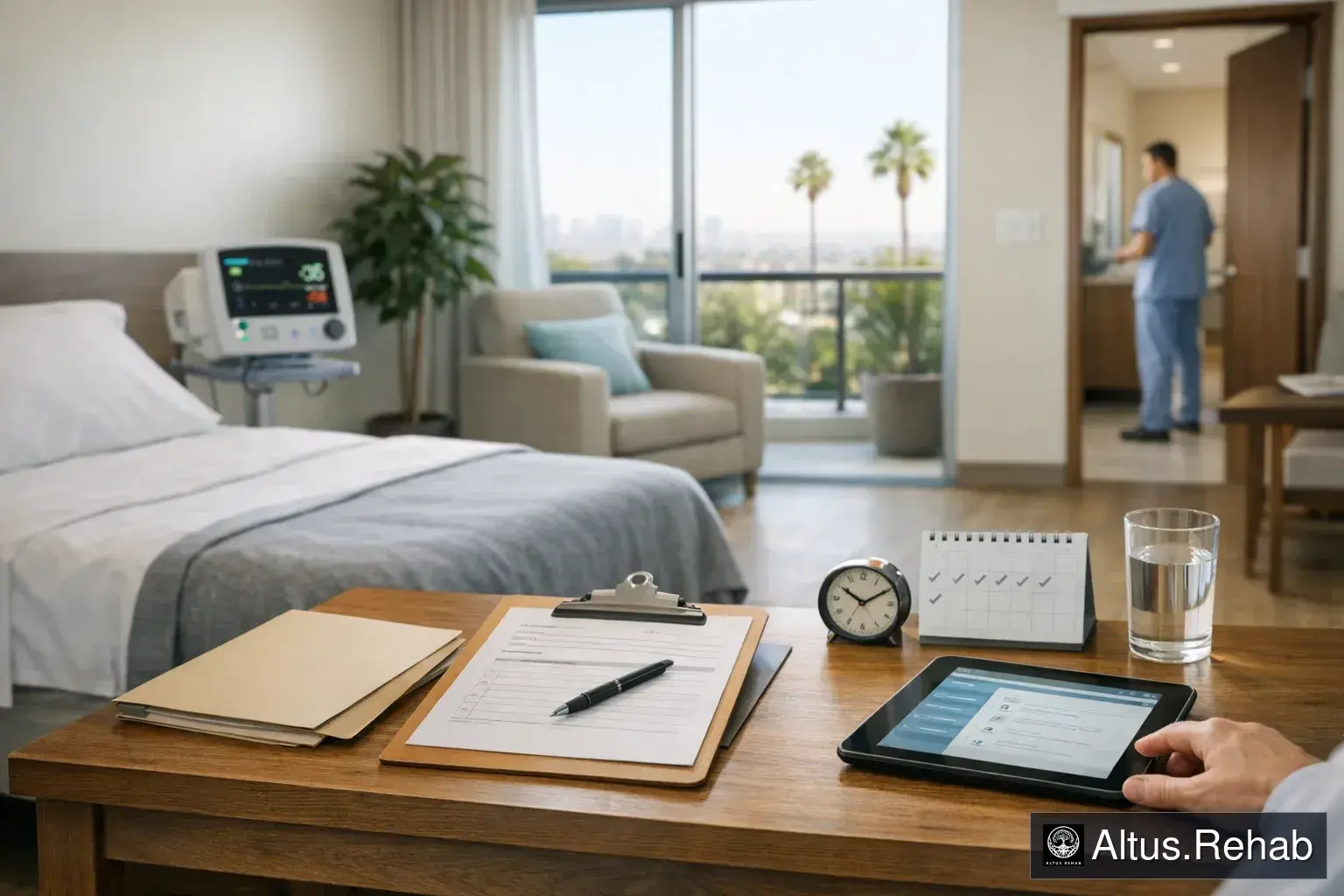
When you arrive, the first goal is usually to get you settled and evaluated, not to overwhelm you. A private detox center in Los Angeles should have an organized intake process that balances efficiency with privacy. While each program operates differently, intake often includes:
- A welcome and orientation to the setting
- Identity, consent, and admissions paperwork
- A belongings check for safety
- Review of medications and recent substance use
- Initial nursing assessment
- Vital signs and symptom review
- Medical and psychiatric evaluation
- Discussion of the immediate care plan
If you are arriving from Los Angeles traffic, a family handoff, an airport, or another provider, the center should guide the transition calmly. In private care settings, confidentiality is often a major reason people choose treatment. Professionals, public-facing individuals, and families in neighborhoods such as Beverly Hills, Malibu, Santa Monica, Encino, or Hollywood Hills often want a more discreet environment for exactly this reason.
Confidential admissions and privacy on day one
Privacy matters, especially in the first hours. Many people entering detox are worried about being seen, judged, or exposed. A private setting does not remove the medical realities of withdrawal, but it can reduce outside stress. That means fewer distractions, more direct staff attention, and a more controlled environment while you are physically uncomfortable and emotionally vulnerable.
Confidential intake steps may include private conversations about substance use, mental health, family contact preferences, and practical planning for the next few days. If a loved one is involved, staff may ask what information you want shared and with whom. That matters for adults who want family support without giving up control over every detail of their care.
What to bring mentally into intake
The easiest intake is usually the most honest one. If you are wondering how much detail to give, the safest answer is: as much accurate information as you can. Even if you feel ashamed, details about your actual use pattern help staff estimate risk. It is especially important to disclose:
- Recent alcohol intake
- Any benzodiazepine use, including Xanax or other sedatives
- Opioid use including heroin, fentanyl, prescription pain medication, or kratom
- Methamphetamine or cocaine use
- Any mixing of substances
- Any attempt to stop recently and what happened
People sometimes minimize use because they are embarrassed or afraid they will be judged. In reality, those details can directly affect how closely you are monitored in the first day and whether medications may be considered.
Medical Evaluation, Withdrawal Risk Screening, and Stabilization
After intake, the next major step is evaluation. This is where detox becomes more than a place to wait out symptoms. Medical detox uses clinical assessment to understand how likely withdrawal is to worsen, what complications need to be watched for, and what immediate supports may help you stabilize.
Medical and psychiatric assessment on arrival
A medical and psychiatric assessment on arrival may include:
- Review of recent substance use and timing of last use
- History of withdrawal symptoms or complications
- Current symptoms such as tremor, sweating, nausea, anxiety, agitation, insomnia, pain, or cravings
- Vital signs such as blood pressure, pulse, temperature, and oxygen status when indicated
- Screening for dehydration, poor nutrition, or sleep deprivation
- Review of past medical conditions and medications
- Assessment of mood, anxiety, orientation, thought process, and immediate psychiatric risk
This is one reason the first 24 hours vary so much from person to person. Two people can both say they need detox from alcohol, benzos, meth, or kratom and still require very different levels of monitoring based on age, overall health, use pattern, and prior history.
How do staff decide what medications or monitoring you may need in the first 24 hours?
Staff generally look at a combination of factors:
- The specific substance or substances involved
- The amount used and duration of use
- How long it has been since last use
- Current withdrawal signs and symptom severity
- Past withdrawal history, including seizures or delirium
- Medical and psychiatric background
- Risk of oversedation, dehydration, self-harm, or acute instability
For example, someone at risk for serious alcohol or benzodiazepine withdrawal may need closer early observation and medication management than someone detoxing from cannabis. Someone withdrawing from opioids may need monitoring for escalating discomfort, vomiting, dehydration, or blood pressure changes. A person coming off methamphetamine may need assessment for crash symptoms, agitation, paranoia, severe exhaustion, or depression.
Detox medications are not used according to a generic script. They are based on physician-directed judgment and the person’s presentation. Depending on the substance and symptoms, medications may be used to support safety, reduce withdrawal distress, help with sleep, manage nausea, or address specific risks. The purpose is not to promise a symptom-free experience. It is to make withdrawal safer and more clinically manageable.
What stabilization means on day one
Stabilization is a practical word, but it covers a lot. In the first day, stabilization may involve:

- Helping the person rest in a safe environment
- Reducing immediate withdrawal risk
- Monitoring for symptom progression
- Supporting hydration and basic nutrition as tolerated
- Managing anxiety, agitation, or insomnia when clinically appropriate
- Reassessing regularly as symptoms change
Stabilization does not always mean you feel good quickly. It often means things are becoming safer, more predictable, and more closely managed. For someone who has been trapped in repeated cycles of using, crashing, and trying to stop alone, that shift matters.
If you want to understand detox timing beyond the first day, see How Long Does Medical Detox Take? Timelines, Symptoms & Safe Next Steps.
How Symptoms Are Monitored and Managed in the First Day
The phrase withdrawal monitoring first day means staff are not guessing. They are checking how your body and mind are responding over time. Withdrawal can unfold in stages, and symptom severity can rise after arrival. Monitoring helps staff respond early instead of waiting for symptoms to become more dangerous or more distressing.
What staff usually watch during the first 24 hours
Monitoring in the first day may include attention to:
- Heart rate and blood pressure changes
- Shaking, sweating, chills, or temperature changes
- Nausea, vomiting, diarrhea, or poor fluid intake
- Anxiety, panic, irritability, or agitation
- Insomnia or inability to settle
- Confusion, disorientation, or perceptual disturbances
- Pain, muscle tension, restless legs, or body aches
- Cravings and urges to leave treatment early
- Fatigue, depression, or emotional crash symptoms
For families, this is an important point: the first day is not simply “watching someone sleep.” Safe detox involves active reassessment, not passive waiting.
What patients can expect from staff support in the first day
Patients often want to know what support feels like moment to moment. In a medically supervised setting, first-day support may include:
- Clear explanations of what symptoms may come next
- Frequent check-ins from nursing staff
- Medication discussions based on symptoms and risk
- Help with hydration, meals, or tolerated snacks
- Encouragement to rest without isolating from medical oversight
- A calmer environment with reduced outside stressors
- Reassurance when anxiety makes symptoms feel worse
That reassurance matters. Many people enter detox convinced they have already failed because they could not stop on their own. The first day should begin replacing fear and chaos with structure. The staff’s role is not only to monitor symptoms but to explain them, put them in context, and help the patient stay engaged with the process.
Realistic expectations about discomfort and relief
A trustworthy explanation of what happens in medical detox should be realistic. You may still feel uncomfortable in the first 24 hours. Depending on the substance, you may feel shaky, nauseated, anxious, restless, sweaty, depressed, exhausted, or unable to sleep. You may also feel emotionally exposed now that the substance is wearing off.
Medical detox is not the same as a symptom-free experience. It is a safer and more supported way to get through a medically vulnerable period. In a private setting, staff should balance comfort with clinical observation, which means they pay attention both to how you feel and to whether your condition is changing in a way that requires intervention.
When symptoms may intensify after arrival
Some people expect the worst symptoms to happen immediately. Sometimes they do not. The first 24 hours are often a transition period in which staff track whether symptoms are just beginning, peaking, or likely to worsen. Timing depends on the substance involved, how long and how heavily it was used, and your overall health.
That is why people searching for “safe detox for alcohol and benzos” should be especially cautious about trying to push through withdrawal alone. The dangerous part can escalate after a person thinks they are “doing okay.” Medical supervision is designed for that uncertainty.
What a Private Luxury Detox Setting May Include
A luxury detox California setting should not be defined only by appearances. Comfort matters, but comfort should support care rather than distract from it. In the first 24 hours, a private high-end setting can make a meaningful difference when it improves rest, privacy, stress reduction, and continuity of attention.
How comfort, privacy, and safety are balanced
In a private luxury detox environment, the goal is not to create a resort atmosphere while ignoring medical realities. It is to create a setting where a patient can withdraw under supervision without unnecessary chaos. That may include:

- A quieter, more discreet environment
- Private or more private accommodations depending on the program
- Low-stimulation surroundings that support rest
- Responsive staff support during periods of discomfort
- A more dignified intake experience for adults who value confidentiality
For many Los Angeles-area clients, privacy is not a luxury in the superficial sense. It is what makes treatment possible. Executives, professionals, caregivers, entertainers, and people with public-facing lives may delay detox because they fear exposure. A confidential setting can reduce one major barrier to getting help.
What a private medical detox center should still prioritize
No matter how refined the setting is, the first priority should still be medical safety. Ask whether the environment is actually structured for withdrawal management, not just comfort. A true private detox should still center:
- Medical and nursing oversight
- Clear withdrawal assessment
- Medication management when appropriate
- Monitoring during the early withdrawal window
- Planning for step-down or continued treatment
If you are comparing options in medical detox Los Angeles, it can help to read Luxury Detox in California: What to Expect from a Detox Program for a fuller explanation of how private detox programs are typically structured.
Why luxury alone is not enough
Comfort without appropriate clinical attention is not a substitute for detox care. If someone is at risk of alcohol or benzodiazepine withdrawal complications, or has significant polysubstance use, the deciding factor should be whether the center can appropriately assess and monitor them in the first 24 hours. Amenities may improve the experience, but they do not replace medical judgment.
When the First 24 Hours Look Different by Substance
One of the most important things to understand is that the first day is highly substance-specific. The phrase “detox” covers very different withdrawal patterns. This is why first-day planning should be individualized rather than generic.
Is the first day of detox different for alcohol, benzodiazepines, opioids, or stimulants?
Yes. Very much so.
Alcohol
Alcohol withdrawal can begin within hours after stopping, and for some people it can progress into serious complications. In the first 24 hours, staff may pay close attention to tremor, sweating, anxiety, elevated vital signs, nausea, insomnia, confusion, or worsening agitation. The person’s history matters a great deal, especially any previous seizure, hallucinations, or severe withdrawal episode.
If you are worried about heavy daily drinking or repeated withdrawal episodes, medically supervised detox is often the safer route than stopping abruptly without support. This is a key part of safe detox for alcohol and benzos.
Benzodiazepines
Benzodiazepine withdrawal can also be medically risky, particularly after regular use, higher doses, long-term use, or abrupt discontinuation. The first day may involve careful review of what medication was used, how much, how often, and when it was last taken. Symptoms can include anxiety, tremor, insomnia, perceptual disturbance, panic, and escalating withdrawal risk over time.
Benzodiazepines require specialized assessment. Someone searching specifically for Xanax-related detox concerns may find it helpful to review Xanax Detox Los Angeles.
Opioids, heroin, and fentanyl
Opioid withdrawal is usually not described the same way as alcohol or benzodiazepine withdrawal in terms of life-threatening complications, but it can still be extremely difficult and destabilizing. In the first day, symptoms may include anxiety, body aches, sweating, chills, gastrointestinal distress, restlessness, yawning, insomnia, and intense cravings. People withdrawing from heroin or fentanyl may also present with dehydration, poor sleep, and a high risk of leaving early if discomfort is not managed carefully.
For families, the practical issue is not whether opioid withdrawal is “just flu-like.” It is whether the person can safely tolerate the process, remain engaged, and transition into treatment instead of cycling back to use.
Kratom
Kratom withdrawal can look different from person to person depending on the amount used, product strength, and whether other substances are involved. Some people report restlessness, anxiety, gastrointestinal upset, sleep problems, mood changes, aches, or cravings. Because kratom acts on opioid-related systems and can vary in formulation, the first day may require a tailored assessment rather than assumptions.

If kratom is part of the picture, Altus Rehab also has a dedicated service page on kratom treatment, and readers often benefit from comparing symptoms and timing with the broader detox process.
Methamphetamine and other stimulants
The first 24 hours of methamphetamine detox may center less on classic autonomic withdrawal and more on crash symptoms, exhaustion, agitation, depression, sleep disruption, paranoia, or emotional instability. Some people arrive highly anxious and unable to settle. Others are profoundly fatigued. Monitoring is still important because stimulant withdrawal can involve impaired judgment, severe mood symptoms, and unpredictable presentation, especially if other substances are involved.
Cocaine
Cocaine withdrawal can involve fatigue, mood changes, irritability, sleep disruption, increased appetite, and strong cravings. Some patients feel emotionally flat or deeply uncomfortable when the stimulant effects wear off. Others may become anxious or depressed. The first day may focus heavily on observation, supportive care, and psychiatric screening when needed.
Cannabis
Cannabis withdrawal is often less medically acute than alcohol or benzodiazepine withdrawal, but it can still be significant. Irritability, insomnia, appetite changes, anxiety, and restlessness can make the first day more difficult than people expect, especially when cannabis is one part of a larger substance use picture.
Polysubstance use
Polysubstance use often makes the first 24 hours more complex. If someone is using alcohol with benzodiazepines, opioids with stimulants, kratom with prescription sedatives, or multiple substances in changing patterns, the detox team has to sort through overlapping effects and withdrawal timing. This is one of the clearest examples of when supervised detox may be safer than trying to stop alone at home.
First-day detox needs vary by substance and health history. That is not a disclaimer; it is a central fact. A safe detox plan depends on the details.
Can You Go Straight From Detox Into Residential Treatment if You Need More Support?
Yes, in many cases detox is only the first stage. If you still need structure, relapse prevention, therapy, psychiatric support, or more time away from triggers, transitioning directly into residential treatment may be the most practical next step.
For some people, this is decided before arrival. For others, it becomes clear during the first 24 hours that detox alone will not be enough. Common reasons to continue into residential treatment include:
- Repeated relapse after prior detox attempts
- Strong cravings once acute symptoms begin to settle
- Unstable home or social environment
- Co-occurring mental health needs
- Polysubstance use or long-term dependence
- Family conflict or limited outside support
- Need for a more structured recovery plan immediately after stabilization
A smoother transition from detox to residential care can reduce the gap between physical stabilization and deeper treatment work. If you are considering that path, see Luxury Residential Addiction Treatment in Los Angeles, CA.
How Can Families Tell Whether Private Medical Detox in Los Angeles Is the Safest Choice?
Families often feel pressure to make a fast decision while lacking clear information. They may be asking whether the person really needs detox, whether home withdrawal is reasonable, or whether a private setting is justified. A useful way to think about it is to focus on risk, complexity, and likelihood of follow-through.
Signs supervised detox may be the safer option
- Regular alcohol use with tremors, sweating, morning drinking, or prior withdrawal symptoms
- Use of Xanax or other benzodiazepines, especially daily or long-term use
- History of seizure, hallucinations, delirium, or severe withdrawal
- Use of heroin, fentanyl, prescription opioids, or kratom with inability to stop
- Methamphetamine or cocaine use with agitation, paranoia, severe crash symptoms, or sleep deprivation
- Mixing substances in unpredictable ways
- Underlying medical issues, mental health symptoms, or suicidal thoughts
- Multiple failed attempts to detox at home
Families in Los Angeles often also weigh privacy and environment. A private detox setting may be especially appropriate when the person is more likely to accept care in a discreet, lower-stimulation environment than in a more institutional setting. The point is not image. The point is whether the environment makes it easier for the person to stay and be safely monitored.
When not to wait for things to get worse
Many families delay because they are trying to decide whether the problem is “serious enough.” A better question is whether the person can stop safely without medical support and what happened the last time they tried. If past attempts led to panic, vomiting, shaking, confusion, relapse within hours, or immediate return to use just to feel normal again, those are meaningful warning signs.
If there is concern about alcohol or benzodiazepine withdrawal risk, rapidly worsening mental status, or an emergency medical issue, immediate medical evaluation is important. Detox centers can often help clarify whether their level of care is appropriate based on the person’s current presentation.

Questions to Ask Before Choosing a Detox Center
If you are comparing programs in Los Angeles or the Greater L.A. Area, the right questions can tell you much more than glossy descriptions will. The goal is to understand how the center handles the first 24 hours, not just how the property looks.
Questions about intake and first-day safety
- What does the detox admission process look like from the first call through arrival?
- How quickly is a patient medically assessed after check-in?
- What information do you need about recent substance use and past withdrawal history?
- How do you determine whether someone is appropriate for your level of care?
- What happens if symptoms escalate after admission?
Questions about monitoring and withdrawal management
- How are withdrawal symptoms monitored during the first day?
- How do your clinical team members decide whether medication may be appropriate?
- How do you handle alcohol or benzodiazepine withdrawal risk?
- How do you approach detox for opioids, fentanyl, kratom, methamphetamine, or polysubstance use?
- How often are patients reassessed in the first 24 hours?
Questions about privacy and setting
- How do you protect confidentiality during admissions and treatment?
- What does a private setting actually mean at your program?
- How do you balance comfort and privacy with medical supervision?
- What kind of support can patients expect if they are anxious or frightened on day one?
Questions about next steps after detox
- If detox goes well, what are the next treatment options?
- Can someone transition directly into residential treatment?
- How do you help families understand whether detox alone is enough?
- What happens if a patient needs longer-term structured care?
These questions are useful whether you are calling from Encino, Tarzana, Glendale, Burbank, Woodland Hills, Malibu, Santa Monica, Beverly Hills, or elsewhere in California. The center’s answers should be specific and process-based. If the response is vague, heavily promotional, or avoids discussing first-day monitoring, keep asking.
FAQ: The First Day of Medical Detox
What happens immediately after you arrive at a medical detox center?
Most people can expect check-in, confidential admissions steps, an initial nursing assessment, vital signs, a review of recent substance use, and a medical and psychiatric evaluation. The team then begins a first-day care plan focused on monitoring, safety, and stabilization.
How do staff decide what medications or monitoring you may need in the first 24 hours?
They look at the substance involved, amount and frequency of use, time of last use, current symptoms, past withdrawal history, medical conditions, and psychiatric concerns. Monitoring and medication decisions depend on those individual factors rather than a standard script.
Is the first day of detox different for alcohol, benzodiazepines, opioids, or stimulants?
Yes. Alcohol and benzodiazepines may require especially careful monitoring because withdrawal can become medically dangerous. Opioids often bring significant physical discomfort and craving. Stimulants such as methamphetamine may involve crash symptoms, agitation, or mood changes. Polysubstance use can make the first day more complex.
Can you go straight from detox into residential treatment if you need more support?
Often yes. Many people benefit from moving directly into residential treatment after detox, especially if they have relapse history, unstable home conditions, co-occurring mental health concerns, or a need for more structure after withdrawal stabilization.
How can families tell whether private medical detox in Los Angeles is the safest choice?
Private detox may be the safer choice when there is alcohol or benzodiazepine use, prior severe withdrawal, polysubstance use, medical or psychiatric complexity, repeated failed home detox attempts, or a strong need for privacy that helps the person accept treatment. The safest next step is often a confidential screening call that reviews the actual substance use history.
How long will the first day take to feel better?
There is no single answer. Some people feel relief quickly once they are in a calm, supervised environment. Others worsen before they improve because withdrawal is still unfolding. The first 24 hours are about safe stabilization, not promising immediate comfort.
Will I be asleep the whole first day?
Not necessarily. Some people rest a great deal, especially after periods of exhaustion or stimulant use. Others are awake, anxious, nauseated, or unable to sleep at first. Staff support is meant to adapt to what is actually happening rather than forcing a fixed routine.
Can family be involved in the first 24 hours?
That usually depends on the program and the patient’s preferences. Because confidentiality matters, staff often clarify what information can be shared and with whom. Family involvement may be helpful, but it should not disrupt the intake and stabilization process.
A Practical Next Step if You Are Unsure About Detox
If you are still trying to picture your first day, that is normal. Most people looking into detox are not asking for a theory. They want to know whether their symptoms, substance use pattern, or past withdrawal history mean detox is the safer next step.
At Altus Rehab, that conversation can start with a confidential explanation of what admissions may look like for your situation, what withdrawal risks may matter in the first 24 hours, and whether detox or residential treatment makes more sense based on the details you share. If you want a direct answer about what your first day could involve in Los Angeles, call (844) 656 3164 and ask about your substance use history, last use, and current symptoms so you can understand the safest next step before arrival.